SPECIAL SESSION #12
Remote Sensing, In-Situ Surveys, and GIS Applications for Marine and Coastal Areas
ORGANIZED BY
 Mariusz Specht
Mariusz Specht
Department of Transport, Gdynia Maritime University, Poland
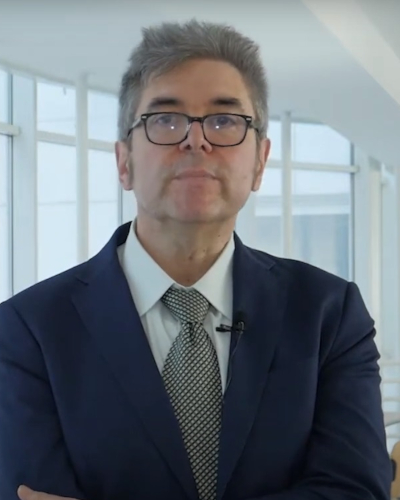 Claudio Parente
Claudio Parente
Department of Science and Technology, Parthenope University of Naples, Italy
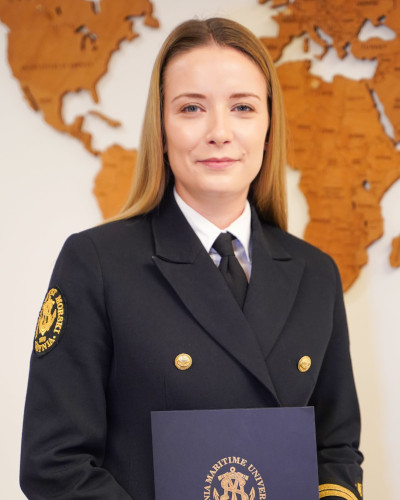 Oktawia Specht
Oktawia Specht
Department of Transport, Gdynia Maritime University, Poland
 Ugo Falchi
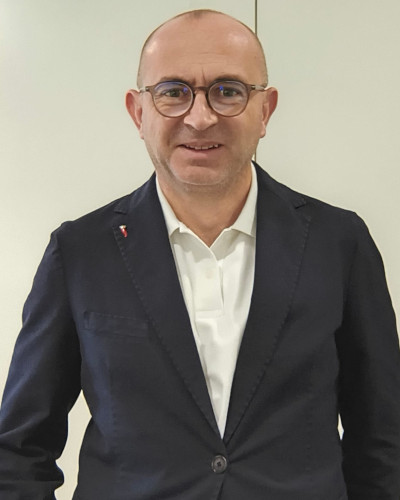
Ugo Falchi
Department of Science and Technology, Parthenope University of Naples, Italy
 Andrea Vallario
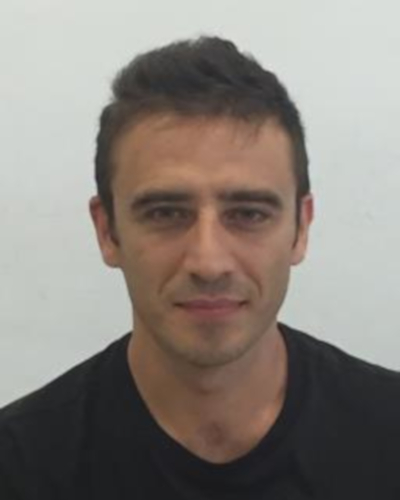
Andrea Vallario
Department of Science and Technology, Parthenope University of Naples, Italy
SPECIAL SESSION DESCRIPTION
Remote sensing and in-situ survey techniques are fundamental for acquiring data related to marine and coastal environments and for supporting scientific studies and long-term monitoring programs. Such data, when properly processed using Geographic Information System (GIS) tools, enable the development of spatial and temporal models for environmental analysis, geo-hazard assessment, activity planning and sustainable coastal zone management.
In this session, we present a wide range of techniques applicable to both land and marine environments. Land-based techniques include, among others, electronic total stations, Global Navigation Satellite Systems (GNSS), and laser scanning. Marine-based techniques include single-beam and multibeam bathymetry, side-scan sonar, and underwater surveys using photo and video acquisition systems. We particularly encourage contributions addressing sensor technologies deployed on airborne platforms, unmanned aerial vehicles (UAVs), and satellites for high-resolution spatial and temporal data acquisition.
This session aims to gather contributions from experts in geomatics, hydrography, remote sensing, photogrammetry, mapping, GIS, data processing, oceanography, coastal modelling, and ecology. Both methodological developments and practical applications are welcome. Particular emphasis is placed on integrated land–sea data acquisition and processing, GIS-based analyses, thematic mapping, 3D modelling, coastline detection, water quality assessment, and the impacts of climate change and extreme events on coastal environments, ecosystems, and human settlements.
Special attention is also given to recent advances in measurement systems, sensor integration, and innovative methodologies for marine and coastal monitoring. Contributions highlighting experiences from research institutions, industry, and interdisciplinary collaborations are particularly encouraged, especially those demonstrating real-world and operational applications.
TOPICS
The session includes, but is not limited to, the following topics:
- Land survey techniques based on total stations, GNSS, and laser scanning;
- Hydrographic survey techniques, including single-beam, multibeam, and side-scan sonar;
- Unmanned survey systems and their applications;
- Multispectral and hyperspectral image processing;
- Coastline detection techniques;
- Data fusion methods;
- 3D modelling and representation of the seabed and terrestrial areas;
- Satellite-Derived Bathymetry (SDB);
- Thematic map production;
- Integration of GIS and survey data;
- Electronic maritime navigation systems, Electronic Navigational Charts (ENC), and the Electronic Chart Display and Information System (ECDIS);
- Advances in sensor technologies and survey methodologies;
- Ecosystem analysis and habitat mapping.
ABOUT THE ORGANIZERS
Mariusz Specht received his PhD in Civil Engineering and Transport from the Polish Naval Academy, Poland, in 2019. His doctoral research focused on determining the territorial sea baseline of a coastal state using an unmanned surface vehicle (USV). He is currently an Assistant Professor at Gdynia Maritime University. He is the author or co-author of 115 peer-reviewed scientific publications, including 1 monograph, 74 articles in JCR-listed journals, 22 articles in other journals, 10 peer-reviewed conference papers, and 8 other publications. He has managed several research projects funded by the National Centre for Research and Development, the Ministry of Science and Higher Education, and the National Science Centre. His research interests include hydrography, unmanned aerial and surface vehicles (UAV/USV), satellite geodesy, and navigation. He led the INNOBAT project (2021–2024), which focused on the development of an autonomous bathymetric monitoring system for shallow water bodies based on integrated UAV and USV measurement platforms and multi-sensor data fusion.
Claudio Parente is a Full Professor of Geomatics and Head of the “Geomatics, Remote Sensing and GIS Laboratory” at Parthenope University of Naples, Department of Science and Technology. He received his degree in Civil Engineering from the University of Naples “Federico II”, a postgraduate Master’s degree in “Sciences and Engineering of the Sea”, and a PhD in Geodetic and Topographic Sciences from the Naval University of Naples. His research activities concern geomatics, including remote sensing, GIS, cartography, digital terrain modelling, and hydrographic and land surveying. He is Vice-Director of the Department of Science and Technology at Parthenope University of Naples. He is the author or co-author of over 130 scientific publications indexed in major databases, including Scopus and Web of Science.
Oktawia Specht received her PhD in Civil Engineering, Geodesy, and Transport from Gdynia Maritime University, Poland, in 2025. Her doctoral research focuses on developing an innovative method for creating a numerical model of the coastal zone based on geospatial data recorded using various sensors. The developed method places particular emphasis on obtaining high-quality depth data up to 1 m, which is challenging due to the excessive draught of manned hydrographic vessels. She is currently an Assistant Professor at Gdynia Maritime University. She has authored or co-authored 36 peer-reviewed publications, including 31 articles in JCR-listed journals. Her research interests include GIS, oceanography, and hydrography.
Ugo Falchi is an Assistant Professor of Geomatics at Parthenope University of Naples. His research focuses on the organisation, processing, management, and querying of cartographic, territorial, and environmental data. His work also includes feature extraction from satellite imagery and applications in operational geodesy. He has over 19 years of teaching experience in geomatics-related disciplines, including photogrammetry, geodesy, and cartography. Since 2006, he has been involved in doctoral education and supervision and has participated in numerous national and international research projects. He is the author or co-author of scientific publications indexed in Scopus.
Andrea Vallario is an Assistant Professor in geomatics at Parthenope University of Naples, Department of Science and Technology. He received his Bachelor’s degree in Computer Science, a Master’s degree in Applied Computer Science, and a PhD in Geomatics, Navigation and Geodesy from Parthenope University of Naples. His research activities concern geomatics and include remote sensing, GIS, image processing, data fusion, and 3D surveying and modelling. Since 2022, he has been an organiser of a special session on geomatics within the IEEE International Workshop on Metrology for the Sea. He is the author or co-author of publications in national and international journals and conference proceedings.