SPECIAL SESSION #06
Applied Marine Zoology as a Tool for Marine Species and Habitats Monitoring and Assessment
ORGANIZED BY
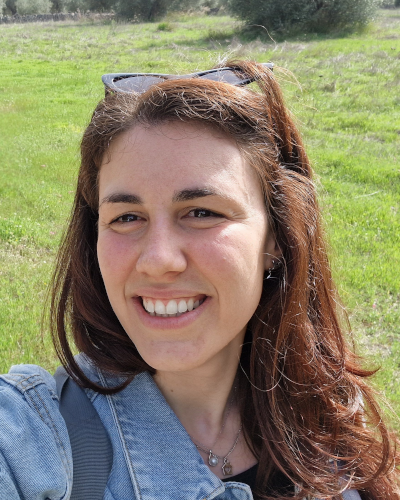 Roberta Trani
Roberta Trani
University of Bari Aldo Moro, Italy
 Maria Chiara Cascarano
Maria Chiara Cascarano
University of Bari Aldo Moro, Italy
 Isabella Coccia
Isabella Coccia
University of Bari Aldo Moro, Italy
 Antonella Schiavo
Antonella Schiavo
University of Bari Aldo Moro, Italy
 Luca Giannattasio
Luca Giannattasio
University of Palermo, Italy
SPECIAL SESSION DESCRIPTION
Marine zoobenthic taxa, including habitat-forming species and bioconstructors, act as key indicators of biodiversity patterns and environmental conditions, making them valuable tools for ecosystem monitoring and management.
This Special Session aims to highlight the contribution of applied marine zoology to the monitoring and assessment of diversity, ecosystem health, and habitat changes in coastal and transitional environments. The session will focus on studies addressing macrozoobenthic species and communities and their potential applications in environmental monitoring, restoration, and bioremediation processes (e.g., within Integrated Multi-Trophic Aquaculture systems).
Contributions addressing biodiversity assessment, habitat monitoring, and population dynamics across different marine environments are welcome, including coastal and transitional areas, lagoons, shallow and deep waters, and semi-submerged or submerged marine caves. Studies exploring restoration and conservation strategies for benthic species and habitats, as well as research on the impacts of climate change and human pressures on benthic communities, are also encouraged.
Special emphasis will be placed on innovative monitoring and measurement approaches, including field-based surveys, underwater observation technologies, and integrative methodologies for the quali/quantitative evaluation of species and habitat diversity and condition. By integrating researches on taxonomy, monitoring and applied conservation strategies, this session aims to promote interdisciplinary discussion on the role of zoobenthic organisms as indicators of ecosystem change and as tools for supporting evidence-based marine management.
TOPICS
We encourage contributions focused on benthic marine species, including but not limited to:
- Applied marine zoology for marine habitat monitoring and environmental assessment;
- Benthic diversity and macrozoobenthic communities as indicators of ecosystem health;
- Bioconstructions and habitat-forming organisms in marine ecosystems;
- Innovative underwater observation and quantitative measurement techniques;
- Role of marine organisms in habitat restoration and bioremediation (including Integrated Multi-Trophic Aquaculture (IMTA) systems);
- Impacts of anthropogenic pressures and climate-driven changes on benthic communities;
- Introduction and spread of alien species and effects on native biodiversity and ecosystem dynamics;
- Physiological and behavioral responses of marine organisms to pollutants, including emerging contaminants.
ABOUT THE ORGANIZERS
Roberta Trani is a postdoctoral researcher at the Marine Zoology Laboratory of the Department of Biosciences, Biotechnologies, and Environment at the University of Bari Aldo Moro. She holds a degree in Environmental Biology and a Ph.D. in Environmental Sciences.
Her research focuses on the bioremediation potential of marine invertebrates and macroalgae in Integrated Multi-Trophic Aquaculture (IMTA) systems, including work carried out within the REMEDIA LIFE project. As part of her research activities, she completed a research stay at the Departments of Ecology and Chemistry at the University of the Balearic Islands (Spain), specializing in extraction and purification techniques for natural products derived from farmed sponges in IMTA facilities.
She has participated in several research projects on marine biodiversity monitoring and conservation, as well as the restoration of habitats degraded by human activities (e.g., aquaculture and emerging pollutants), with particular attention to the role of filter-feeding marine invertebrates. Her research also addresses the effects of climate change on marine ecosystems, including the spread and impacts of alien species. She is a certified European Scientific Diver.
Maria Chiara Cascarano is a marine biologist with an international academic background, she holds an Italian degree in Marine Biology (University of Ancona) and a PhD in Fish Pathology from the University of Crete. Currently, she is a Postdoctoral Researcher at the Department of Zoology of the University of Bari, where her scientific activity focuses on the conservation and monitoring of endangered marine benthic species, such as syngnathids.
Her expertise integrates the assessment of population health with the analysis of species distribution across coastal waters. Through the application of underwater monitoring techniques and demographic analysis, she studies the impacts of anthropogenic factors and climate change on critical habitats. Her work contributes directly to the identification of priority biodiversity areas, supporting international marine protection targets.
Isabella Coccia is a PhD student in Environmental Science at the University of Bari (Marine Biology research group). Her research focuses on characterising and monitoring marine bioconstructions, particularly coastal and mesophotic biogenic habitats. By integrating field surveys with ROV analysis, she investigates macrozoobenthic communities to assess their conservation status against human and climatic stressors. Her work focuses to bridge the gap between biological monitoring and practice, exploring innovative restoration strategies for degraded marine ecosystems through the integrated analysis of ecological and spatial data.
Antonella Schiavo is a PhD student in Environmental Science, focusing on Marine Biology at the University of Bari. Her research investigates the taxonomy and ecology of the phylum Porifera in different marine ecosystems, such as marine caves, lagoons and shallow waters. In addition to classification, her work explores innovative strategies for restoring and restocking sponge populations, with the aim of supporting the conservation of these important marine organisms.
Luca Giannattasio is a PhD student in Biodiversity at the University of Palermo and the University of Bari. His research focuses on the conservation of syngnathids and the study of coastal macrozoobenthic communities, with particular emphasis on lagoon ecosystems. His work integrates field surveys and ecological approaches to assess habitat suitability and biodiversity patterns in transitional coastal environments.