SPECIAL SESSION #02
Towards Transparent Ocean using Underwater Robots and Internet of Things
ORGANIZED BY
 Nazila Fough
Nazila Fough
University of Glasgow
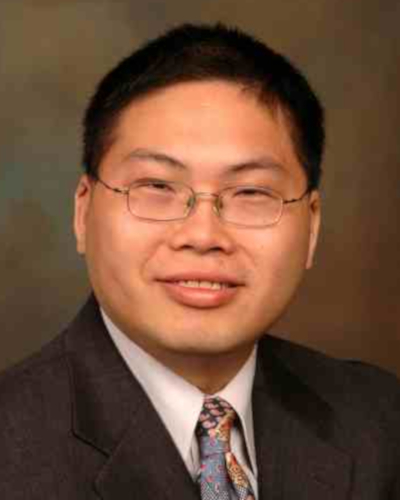 Wai-keung Fung
Wai-keung Fung
Cardiff Metropolitan University
 Naoki Motoi
Naoki Motoi
Kobe University
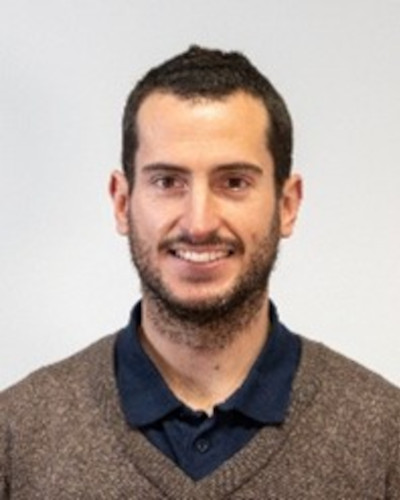 Filippo Campagnaro
Filippo Campagnaro
University of Padova, Italy
 Christopher McDermott
Christopher McDermott
Robert Gordon University
SPECIAL SESSION DESCRIPTION
"Transparent Ocean" refers to the use of advanced underwater imaging and sensing technologies to explore and study the world's oceans. With the help of advanced technologies of underwater sensor networks, IoT devices and robot swarms, sensor nodes can be deployed autonomously or semi-autonomously to the required locations for data acquisition. By using advanced sensors and cameras that can see through the water and capture high-resolution images and data, researchers and engineers can gain a deeper understanding of the ocean's ecosystems, geology, and the behaviour of marine animals. Transparent Ocean technology has applications in a wide range of fields, from marine biology, oceanography to offshore oil and gas exploration, surveillance of critical subsea assets and underwater archaeology. The use of advanced imaging and sensing technologies can help us to better understand the impact of climate change on the oceans, identify new species of marine life, and explore previously undiscovered underwater environments. With the development of new materials and technologies, Transparent Ocean technology is becoming more accessible and affordable, opening up new opportunities for research and exploration in the world's oceans.
This special session aims to explore the latest developments and advancements in the field of ocean sensing technology and underwater robot swarms and IoTs. The session will focus on how underwater sensor networks can be used to achieve a transparent ocean by providing accurate and reliable data on various ocean parameters such as temperature, salinity, pH, and dissolved oxygen levels at pre-specified locations and formations, as well as 3D reconstruction of subsea assets for the construction of digital twin model for underwater missions. With the help of the recent advances in generative AI and Large Language Models (LLMs), agentic AI technology will be employed in automation of monitoring, inspection, diagnosis and exploration missions in dynamic underwater environments. The session will bring together leading researchers, scientists, and industry experts to discuss the challenges and opportunities associated with underwater sensor networks and robotics, including but not limited to planning, control, navigation and localisation of underwater vehicles and swarms, underwater wireless communications, sensing and imaging, and AI/machine learning in underwater technologies. Participants will share their experiences in deploying and managing these networks and discuss the latest technological innovations in the field. The session will also explore the potential applications of underwater sensor networks in ocean monitoring, environmental protection, and marine resource management.
Overall, the special session promises to be a dynamic and informative event that will provide valuable insights into the future of ocean sensing technology. Attendees can expect to gain a better understanding of the latest trends, challenges, and opportunities in this exciting field, and to network with professionals from academia and industry around the world.
TOPICS
Topics covered in this special session will consider:
- Novel and Bio-inspired Design of Underwater Vehicles;
- Autonomous Underwater Vehicles (AUVs) Navigation and Control;
- Underwater Swarm Formation Planning and Control;
- Underwater Swarm Localisation and SLAM;
- ROV/AUVs Collaboration;
- Underwater Acoustic Communications and Networking Architectures for large scale Underwater Sensor Networks;
- Underwater Acoustic Channel Characteristics and Propagation Models for Communications;
- Energy-efficient routing protocols for Underwater Sensor Networks in Harsh Environments;
- Intelligent Data Fusion Techniques for Underwater Sensor Networks;
- Impacts of Ocean Dynamics on Underwater Sensor Networks;
- Effects of Underwater Noise on the Performance of Underwater Sensor Networks;
- Advanced Sensing and imaging systems in Underwater Sensor Networks;
- Distributed Sensing in Underwater Sensor Networks;
- Sensor Placement for Effective Coverage of Underwater Sensor Networks;
- Underwater Sensor Network Security, Cyber-attacks and Countermeasures;
- Digital Twin of underwater assets and environments;
- Application of Generative AI and Large Language Models in underwater agentic AI systems.
ABOUT THE ORGANIZERS
Dr. Nazila Fough (SMIEEE, MIET) is a Senior Lecturer (Associate Professor) at the University of Glasgow. She is actively involved in IEEE, serving as Chair of the IEEE Oceanic Engineering Society (OES) UK and Ireland Chapter and as a committee member of the IEEE Sensors Council (Education). Her research focuses on data networking protocols and real-time multimedia communications, with applications in subsea technologies including underwater communications, sensing, imaging and monitoring, cyber systems, localization, and smart control. She currently supervises several PhD projects and multiple research projects in these areas.
Dr. Wai-keung Fung is a senior lecturer in electronics, robotics, and control engineering in the Cardiff School of Technologies at Cardiff Metropolitan University, Cardiff, United Kingdom. He is the deputy head of the EUREKA Robotics Centre in Cardiff Met and the lead of the Autonomous Robotics Lab under the centre. Dr Fung has extensive research experience in autonomous robotics, networked robotics, computational intelligence, and machine learning. In particular, he has been involved in research in large-scale underwater swarm localisation and underwater robot control and navigation. He has co-authored over 70 international, peer-reviewed journals and conference papers in his research career. He also has experience in managing nationally and industry-funded projects. He is a member of the EPSRC Peer Review College, and he has been recognised the Outstanding Associate Editor of IEEE Access in 2021-2024.
Dr. Naoki Motoi received the B.E. degree in system design engineering and the M.E. and Ph.D. degrees in integrated design engineering from Keio University, Japan, in 2005, 2007, and 2010, respectively. In 2007, he joined the Partner Robot Division, Toyota Motor Corporation, Japan. From 2011 to 2013, he was a research associate at Yokohama National University, Japan. Since 2014, he has been with Kobe University, Japan, where he is currently an associate professor. From 2019 to 2020, he also held the position of a visiting professor at the Automation and Control Institute (ACIN), TU Wien, Austria. His current research interests include robotics, motion control, and haptics.
Dr. Filippo Campagnaro (Senior Member, IEEE) received the Ph.D. degree in information engineering from the Department of Information Engineering, University of Padova, Padova, Italy, in 2019. He is currently an assistant professor with the Department of Information Engineering and cofounder of SubSeaPulse SRL, a startup company active in developing innovative solutions for underwater communications and wireless sensors for studying biodiversity and climate change in coastal areas. He has been working in UW networks since 2014, joined more than 20 sea trials, and developed several research and industrial prototypes. Since 2021, he has been working on wireless sensors for studying biodiversity and climate change in coastal areas. A former IEEE OES Young Professional Boost laureate, he serves as a member of the IEEE OES Administrative Committee.
Dr. Christopher McDermott has expertise in security engineering, with a focus on technically grounded approaches to the design and analysis of secure systems. He supervises PhD students investigating how digital systems interface and how those interfaces can be secured by design. His work spans security engineering, cybersecurity knowledge graphs and ontologies, large language models for cyber defence, and machine-learning–based threat detection (including IoT botnet/DDoS detection and anomaly discovery). His research also includes the security of constrained and non-traditional communication environments, including underwater and acoustic communications, with an emphasis on resilience, trust, and adversarial interference. In addition, his research spans social-network security, with an emphasis on misinformation, deepfakes, and influence, alongside technical challenges such as phishing detection, social-engineering attack modelling, insider-threat analysis, and situational-awareness systems. He has published in leading AI and cybersecurity venues, contributing methods for threat detection, social-network analysis, and the construction of security intelligence from knowledge graphs.