SPECIAL SESSION #08
Marine Robotics for Environmental monitoring and preservation
ORGANIZED BY
 Giulia De Masi
Giulia De Masi
Sorbonne University Abu Dhabi
 Federico Renda
Federico Renda
Khalifa University
 Andrea Tiranti
Andrea Tiranti
Khalifa University
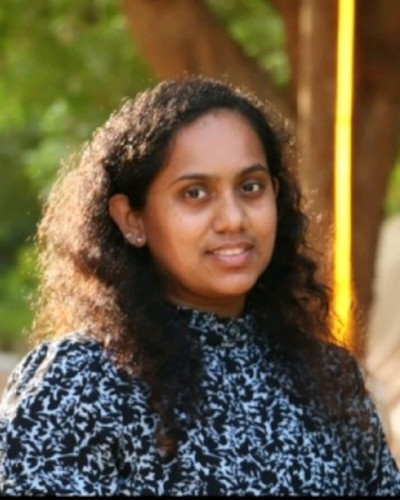 Vidya Sudevan
Vidya Sudevan
Khalifa University
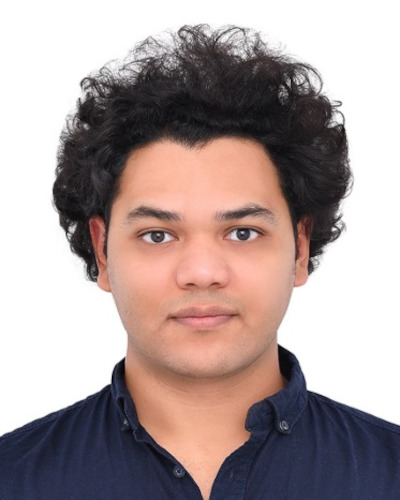 Mohamed ElHanbaly
Mohamed ElHanbaly
Khalifa University
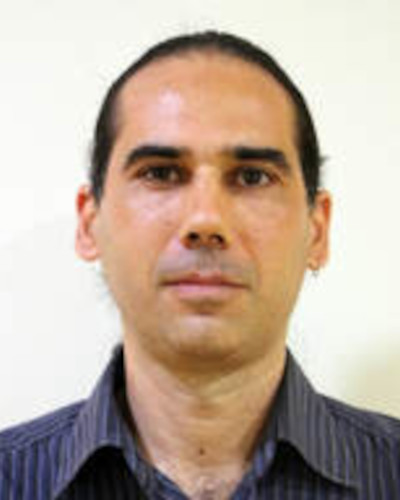 Adrián Navarro Moya
Adrián Navarro Moya
Sorbonne University Abu Dhabi
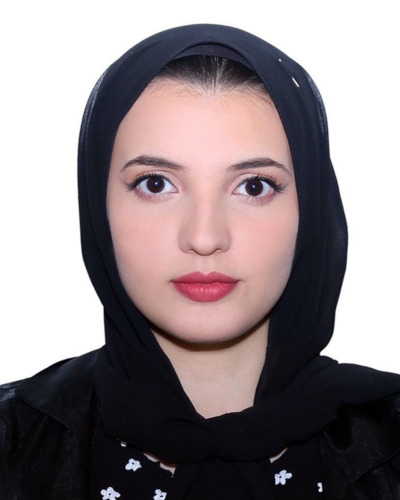 Rim ElTobgui
Rim ElTobgui
Khalifa University
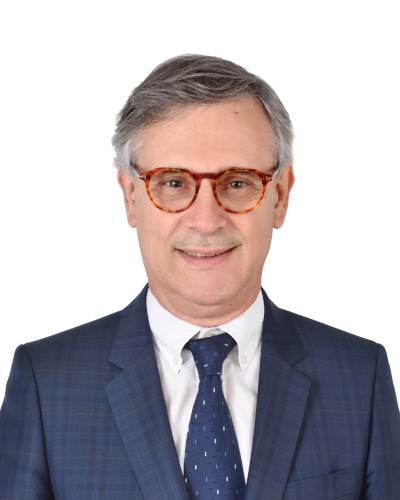 Jorge Dias
Jorge Dias
Khalifa University
SPECIAL SESSION DESCRIPTION
This special session aims to bring together researchers from the different disciplines of Marine Robotics, with particular attention to robotic systems in the natural environment.
The marine environment is of paramount importance for scientific, commercial, and industrial motivations. The underwater environment includes ecosystems of high ecological value, as well as biological, naturalistic, mining, and archaeological sites that are difficult to explore and inspect. Submarine exploration and survey are of great interest to numerous research fields, from environmental monitoring and preservation to commercial applications.
Due to the challenges of underwater human exploration, even when limited to shallow waters, robots are increasingly employed in those types of investigations in place of human operators.
However, the great challenge of Robotics nowadays is the transition from the structured laboratory environment to the unstructured natural environment. Among the many challenges of the underwater environment, localization and communication represent the main concerns for autonomous underwater vehicles (AUVs). Furthermore, the limited range of visibility makes perception, and in particular Computer Vision, particularly difficult, requiring dedicated advanced techniques, including novel AI-based approaches for robust detection, mapping, and scene understanding.
This workshop fits perfectly with the purpose of the symposium by combining the themes of Robotics with Sensors for the Environment, oriented to Biodiversity monitoring, ecosystem preservation, and underwater surveillance.
TOPICS
We welcome original contributors on (including but not limited to):
- Underwater multi-robot systems and Swarm Robotics;
- Bio-Inspired Robotics;
- Soft Robotics;
- Edge AI for marine sensing, perception, and control;
- Low-power/edge AI for field deployments;
- Ethics and standards in marine AI & robotics.
ABOUT THE ORGANIZERS
Dr. Giulia De Masi (Senior Member, IEEE) is Associate Professor at Sorbonne University Abu Dhabi, and Principal Investigator with Habilitation as Research Director, working at the interface of the Center for Artificial Intelligence (SCAI) and the Ocean Institute. She also serves as Distinguished Lecturer for the IEEE Oceanic Engineering Society (IEEE-OES).
After her PhD, she has a career between Industrial and Academic Research. In 2008, she started working in the R&D field for the Marine Industry (Snamprogetti Center of Excellence, Italy), joining the Department of Advanced Engineering Services and Technology Innovation Projects. Since 2016, she worked in several academic institutions in United Arab Emirates, before joining Sorbonne University. She has more than 100 peer-reviewed publications (including journals and conferences), 4 patents and more than 40 reports for industry. She has been awarded as Women in Engineering (WIE) Propel Laureate by IEEE OES in liaison with WIE, and IEEE Honor member (HKN) for scholarship achievements. She is AdCom member of IEEE OES, and Co-Chair of the Technical Committee of Marine Robotics of IEEE RAS. Moreover, she is Associate Editor for the IEEE Journal of Oceanic Engineering. Her research interests include Collective Intelligence, Machine Learning, Deep Learning, with applications to underwater multi-robot systems.
Dr. Federico Renda is an Associate Professor in the Department of Mechanical and Nuclear Engineering at Khalifa University in Abu Dhabi, UAE. Before joining Khalifa University, he was a Post-Doctoral Fellow at the BioRobotics Institute of Scuola Superiore Sant’Anna, where he received his Ph.D. degree in 2014. Dr. Renda has been a visiting professor at the National University of Singapore (NUS), the National Institute for Research in Digital Science and Technology (INRIA, Lille), and others. He has been appointed as an Editor and Program Committee Member of prominent robotics journals and conferences, including the International Journal of Robotics Research (IJRR) and the International Conference on Robotics and Automation (ICRA), among others. Dr. Renda’s research interests encompass the study of multibody flexible systems, with an emphasis on the modeling and control of soft and underwater robots.
Andrea Tiranti received the B.S. degree in Biomedical Engineering from UNIVPM, Italy, in 2019, and the M.Sc. degree in Robotics Engineering from the University of Genoa, Italy, in 2021. He obtained the Ph.D. in Robotics and Autonomous Systems from DIBRIS, University of Genoa, in July 2025.
In 2023, he was a visiting researcher at the Institute for Systems and Robotics (ISR), University of Lisbon, Portugal. He was a fellowship researcher and Postdoctoral Fellow at DIBRIS in 2025, and is currently a Postdoctoral Fellow at Khalifa University. He has contributed to nationally funded Italian research projects and has published in peer-reviewed international journals in the fields of marine robotics and ocean engineering. His research interests include control and automation, distributed control systems, marine robotics, and multi-vehicle (multi-agent) systems, with a strong focus on cooperative and underwater applications.
Vidya Sudevan received the B.Tech. degree in Electrical and Electronics Engineering and the M.Tech. degree in Instrumentation and Control Systems from the University of Calicut, India, in 2012 and 2016, respectively. She obtained her Ph.D. in Engineering, with a concentration in Robotics, from Khalifa University, Abu Dhabi, United Arab Emirates, in 2025. She is currently a Post Doctoral Fellow at Khalifa University, where she previously served as a Research Associate from 2016 to 2021. Her research focuses on neuromorphic computing, spiking neural networks, multimodal perception, and localization for robotic applications, with particular emphasis on operation in harsh and challenging environments. She has authored publications in peer-reviewed journals and conference proceedings in her field and serves as a reviewer for leading venues, including ICRA, RAL, ICAR, and ITU journals and conferences.
Mohamed El Hanbaly received the B.Sc. degree in mechanical engineering from the University of Sharjah, Sharjah, United Arab Emirates, in 2020, and the M.Sc. degree in mechanical engineering from Khalifa University, Abu Dhabi, United Arab Emirates, in 2022, where he is currently pursuing the Ph.D. degree in engineering. His research interests include cooperative localization and navigation of autonomous underwater vehicles, underwater communication, and swarm intelligence.
Adrián Navarro Moya is a Research Assistant at Sorbonne University Abu Dhabi, UAE. He is an environmental scientist, researcher, and technology innovator with a strong academic foundation, holding a Bachelor's degree in Environmental Sciences from the University of Granada and pursuing a PhD in Marine and Coastal Science and Technology at the Polytechnic University of Valencia—his work bridges marine ecology, biomimetic robotics, and sustainable engineering. Throughout his career, Adrián has participated in numerous international research projects across Europe and the Middle East, focusing on aquatic ecosystems, biodiversity monitoring, and habitat restoration.
Rim ElTobgui received her B.Sc. degree in Electromechanical Engineering from the University of Alexandria, Egypt, in 2021, and her M.Sc. degree in Electrical and Computer Engineering from Khalifa University, UAE, in 2024. She is currently pursuing a Ph.D. in Engineering at Khalifa University, specializing in Robotics. Her research focuses on underwater robot vision and autonomous perception, with particular interest in marine environments. Her doctoral work focuses on leveraging vision-language models (VLMs) to advance underwater scene understanding and support the monitoring of marine ecosystems and subsea infrastructure.
Jorge Dias PhD (1994), Dr Habil (2011), is a Professor at Khalifa University in Abu Dhabi, UAE, where he leads research and academic activities in Autonomous Robotic Systems. He also serves as Deputy Director of the Center for Autonomous Robotic Systems (KUCARS).
He received his Ph.D. and Habilitation (Doctor of Science/Agregação) in Electrical Engineering from the University of Coimbra, Portugal. His research focuses on Artificial Perception, Computer Vision, and Robotic Vision, with contributions to the field since 1984. Professor Dias pioneered the integration of multisensing and multimodal approaches in Artificial Perception, including Visual–Inertial sensing (2006–2007) and Visual–Auditory sensing (2008). His work also includes cognitive models for robotics using Bayesian frameworks for multimodal perception, with applications in active attention, navigation, and multi-robot cooperation. His book Probabilistic Approaches for Robotic Perception (2014) presents foundational work on Bayesian methods for computational intelligence. His recent research explores Neuromorphic Computing for Artificial Intelligence and Artificial Perception (2023–2024). He has led several international research projects in Europe and the Middle East and has authored over 370 scientific publications.