SPECIAL SESSION #05
Artificial Intelligence for Marine Ecosystem Monitoring, Biodiversity Conservation, and Climate Change Impact Assessment
ORGANIZED BY
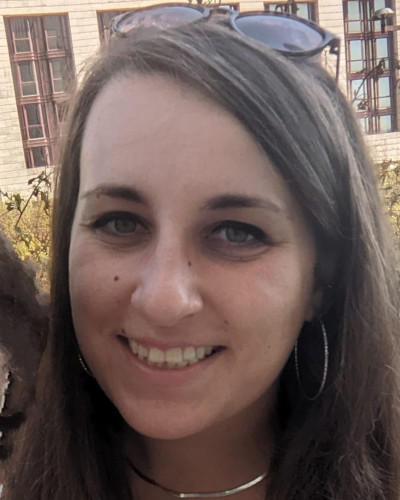 Fabiana Di Ciaccio
Fabiana Di Ciaccio
University of Florence, Italy
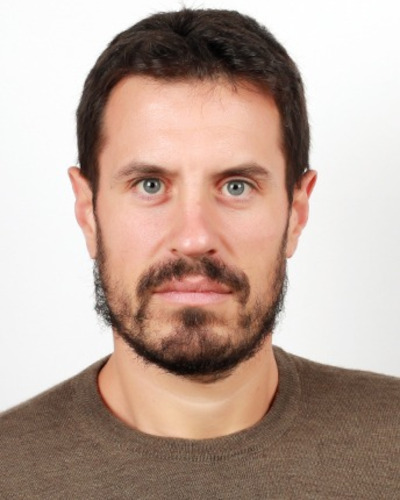 Paolo Russo
Paolo Russo
Roma Tre University, Italy
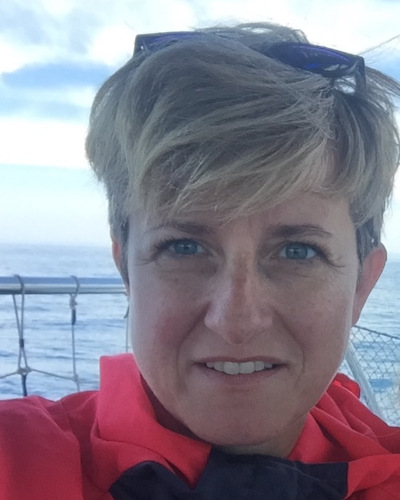 Rosalia Maglietta
Rosalia Maglietta
National Research Council of Italy (CNR-STIIMA)
 Giulia De Masi
Giulia De Masi
Sorbonne University, Abu Dhabi
 Roberto Pierdicca
Roberto Pierdicca
Polytechnic University of Marche, Italy
 Eva Savina Malinverni
Eva Savina Malinverni
Polytechnic University of Marche, Italy
 Giorgia Verri
Giorgia Verri
CMCC Foundation
SPECIAL SESSION DESCRIPTION
The world's oceans and seas host an extraordinary diversity of marine life and provide essential ecosystem services for human societies. However, they face unprecedented threats from anthropogenic pressures such as overfishing, pollution, habitat degradation, and accelerating impacts of climate change. Rising ocean temperatures, acidification, salinity exacerbation, and extreme weather events are reshaping marine environments, endangering biodiversity, and disrupting ecological balance. Addressing these challenges requires cutting-edge analytical techniques techniques capable of providing real-time, high-resolution, and predictive insights into marine ecosystem dynamics.
Artificial Intelligence (AI) and Deep Learning (DL) technologies have emerged as transformative tools in marine environmental monitoring, ecosystem conservation, and climate change impact assessment. These methodologies enable precise, automated analysis of complex datasets, helping the researcher to unveil the intricate relationship between human activities, climate change, and ocean health. AI-driven solutions offer unprecedented capabilities for the development of effective policies and strategies to tackle marine environment preservation, as well as for supporting economic, socio-economic and statistical analyses of marine conservation initiatives and their impacts on Blue Economy development. These include critical habitat monitoring and restoration, the identification of priority areas for megafauna and vulnerable species conservation and pollution reduction. The use of AI and DL in marine conservation efforts has the potential to renovate our ability to protect the world's oceans, allowing us to more effectively manage human-induced stressors and fostering a sustainable ocean management.
We welcome contributions that showcase novel AI methodologies and interdisciplinary approaches harnessing AI for the monitoring and preservation of our oceans. Papers in this special session will explore how AI techniques (e.g., Deep Learning, Machine Learning and Computer Vision) can be used to monitor, model and predict the marine ecosystems dynamics and the effects of climate changes on the environment. Topics of interest include also species distribution modelling, priority habitat monitoring and mapping, ocean weather forecasting and automated systems for marine environment monitoring and reduction. Contributions exploring the economic, socio-economic and statistical dimensions of marine monitoring and conservation activities, including their implications for Blue Economy development, are also encouraged. They may also consider the potential for AI to help preserve and restore cultural heritage sites that are threatened by rising sea levels and extreme weather events.
TOPICS
This special session aims at collecting all the contributions broadening the knowledge on this field; in particular, potential Artificial Intelligence, Deep Learning and Machine Learning applications could be, but are not limited to, the following:
- Assessment of climate change impact on marine and coastal environment:
- Prediction of sea-level rise, ocean acidification, and other climate change impacts.
- Greenhouse gas emissions from marine transport and energy systems.
- Prediction models for ocean weather forecasting, tides and temperature fluctuation.
- Monitoring and conservation tools for marine megafauna and vulnerable marine habitats:
- Species distribution modelling for cetaceans, sea turtles and other marine megafauna.
- Assessment of human-marine megafauna interactions (e.g., entanglements, acoustic pollution) to inform mitigation measures.
- Monitoring and assessment of priority habitats, such as seagrass meadows, estuaries and coral reefs, to evaluate their health status and their role in providing essential ecosystem services.
- Coastal and ecosystem monitoring, management and mapping.
- Preservation and restoration of cultural heritage sites threatened by climate change impacts on coastal communities and regions.
- Marine and underwater sensor, data processing, navigation and localization:
- Visual data, e.g., underwater target localization, detection, florae and fauna classification.
- Processing of acoustic or other kind of data, e.g., raw signal processing, denoising, attitude estimation.
- Visual and inertial based methods for robots positioning.
- Navigation and mapping, SLAM algorithms, intelligent, adaptive or bio-inspired control architectures, obstacle avoidance.
- Morphological and morphodynamical modelling of coastal and seabed areas.
- Pollution source and litter detection, localization and monitoring.
- Sustainable fishing and aquaculture practices.
- Economic, socio-economic and statistical analyses of marine conservation initiatives, including Blue Economy impacts, Citizen Science programs and sustainable marine tourism.
ABOUT THE ORGANIZERS
Fabiana Di Ciaccio is an assistant professor (RTDa) at the Department of Civil and Environmental Engineering of the University of Florence and member of the Geomatics for Environment and COnservation of Cultural heritage (GECO) Laboratory. She holds a PhD from Parthenope University of Naples in in Environment, Resources and Sustainable Development - UNESCO Chair and her research interests include Environmental Monitoring and machine/deep learning (sea surface temperature prediction, shoreline extraction, optimization of the orientation for maritime automated vehicles, etc); monitoring and preservation of cultural heritage against natural and anthropogenic risks and the effects of climate change, metrology, underwater photogrammetry and 3D reconstruction techniques. Dr. Di Ciaccio is part of the ISPRS WG II/7 for Underwater Data Acquisition and Processing. She worked as Guest Editor for Elsevier, Springer and MDPI journals and as special session chair for the International Workshop on Metrology for the Sea. She is lead organizer of the 1st International Workshop on Computer Vision for Environment Monitoring and Preservation (ICIAP 2023, ICIAP 2025) and of the Workshop on Machine Vision for Earth Observation and Environment Monitoring (BMVC 2023, BMVC 2024, BMBC 2025). She works as reviewer for the most influential conference and journal dedicated to metrology, geomatics and Artificial Intelligence techniques applied to the environment.
Paolo Russo is a Tenure Track Researcher at Roma Tre University. He received the B.S. degree in Telecommunication Engineering from Università degli studi di Cassino, Italy, in 2008, and the M.S. degree in Artificial Intelligence and Robotics from University of Rome La Sapienza, Italy, in 2016. He received Ph.D. degree in Computer Science from University of Rome La Sapienza in 2020.From 2018 to 2019, he has been a researcher at Italian Institute of Technology (IIT) in Tourin, Italy, while from 2020 to 2025 he has been an Assistant Researcher at AlcorLab in DIAG department, University of Rome Sapienza, Italy. His main research interests are Deep Learning, Computer Vision, Signal Processing, and Reinforcement Learning.
Rosalia Maglietta, Ph.D. in Physics, is a Senior Researcher at the National Research Council of Italy (CNR-STIIMA), an Associate Researcher at the Euro-Mediterranean Center on Climate Change (CMCC), and a member of the Scientific Committee of the Jonian Dolphin Conservation. Her research focuses on Artificial Intelligence and Machine Learning, with particular emphasis on Generative AI and pattern recognition applied to complex environmental data. Maglietta develops data-driven methodologies for the observation, monitoring, and modeling of marine ecosystems, integrating advanced sensing technologies with citizen science approaches to support biodiversity conservation. Beyond the technical implementation, her work explores the Human–AI relationship in environmental contexts, promoting critical thinking, environmental awareness, and responsible engagement with AI. She currently serves as scientific lead for CNR in the Interreg South Adriatic project A.I. EDU SEA, aimed at integrating Generative AI into ocean and environmental education to foster AI literacy and interdisciplinary learning on climate and marine ecosystems. With over 100 scientific publications in international journals and conference proceedings, she contributes to the scientific community as editor and reviewer for several prestigious international journals, advancing interdisciplinary research at the intersection of metrology, data science, and marine conservation.
Giulia De Masi is Associate Professor at Sorbonne University, Abu Dhabi. She received a master in Physics (2003) and a PhD in 2006, on Complex Systems at institutions such as the University of Rome La Sapienza, Institute of Complex Systems (CNR) and University of L’Aquila. Her multidisciplinary background spans Academia and the Private Sector R&D, where she led advanced technology innovation projects, particularly in AI and Machine Learning for Marine environment and Oceanic Engineering. She worked at various institutions, including 4 years at Technology Innovation Institute in Abu Dhabi (UAE), where she contributed to the initial setup of the Autonomous and Robotics Center, with special focus to marine Robotics, and served as Principal Scientist and Director for 4 years. She has been PI of 5 large Research Projects, and 2 Industrial Projects. Her main scientific activities deal with Ocean Science & Technology, Collective Intelligence & AI, Machine learning, Data Science, Complex Networks. She is Associate Editor of IEEE Journal of Oceanic Engineering and IEEE Robotics and Automation Letter. She is member of the IEEE OES Ocean Decade Initiative Committee, IEEE OES Design the future Ocean Initiative, and elected member of the Administrative Committee of the IEEE Oceanic Engineering Society.
Roberto Pierdicca is an Associate Professor of Geomatics. He teaches Probability and Statistics, Geo-Information, and Earth Observation Systems @ Università Politecnica delle Marche, and he is affiliated at the Department of Civil, Building Engineering and Architecture where he leads the GAP - Geomatics Applications and Processing - lab. He received his PhD in Information Engineering cum laude in 2017 and subsequently obtained the national habilitation as Full Professor in Geomatics and as Associate Professor in Informatics. He is a member of ELLIS (European Laboratory for Learning and Intelligent Systems). His research activity is strongly interdisciplinary, with more than 150 scientific publications spanning GeoInformation, cultural heritage, forestry and landscape management, human behavior analysis, and eXtended Reality technologies. In 2021, he was awarded with the Outstanding Young Researcher Award by the European Geosciences Union for his contributions to visualization systems in the geosciences, and in 2025 he received the prestigious Remote Sensing Young Investigator Award. Since 2021, he has been consistently listed among the top 2% most cited researchers worldwide according to Stanford University. He is currently coordinating and participating in several national and international research projects and is the scientific advisor and co-founder of Capstudio and of the innovative startup DeepReality, working at the intersection of geospatial technologies, artificial intelligence, and immersive systems.
Eva Savina Malinverni, graduated in Architecture at the Polytechnic of Milan in 1993, PhD in Cartography and Topography in 1996, currently Full Professor of Geomatics. Her research is applied to different fields of Geomatics addressing both Cultural Heritage and the Landscape. Her teaching activity is very wide and is applicable at different academic courses (Master and Degree) at the Engineering Faculty, in Italian and English language. She has the ECDL –GIS certificate like trainer and examiner.
She is the author of more than 196 publications. The trends of last 20 years of research papers and Citations and the actual bibliographic indexes (Scopus) is 80 papers with 951 total citations and H-index 15.
Dr. Giorgia Verri is a physicist with a Ph.D. in physical oceanography on Predictability Studies for Regions of Freshwater Influence. She has been working as a Scien st at the CMCC Foundation since 2012. Since 2023, she has been leading the Coastal Earth System Modeling and Climate Research Unit within the GOCO Division.
She is qualified for the role of Associate Professor in the disciplinary sector 04/A4 – Geophysics.
Dr. Verri is a lecturer in the Ph.D. program Future Earth at the University of Bologna, where she teaches a specialized course on numerical modeling of the hydrosphere.
She par cipates in, coordinates, and serves as scien fic lead for several na onal and interna onal projects focused on numerical modeling of marine and terrestrial waters. Her work emphasizes mul-physics and mul-scale processes in coastal transi on zones, including the assessment of climate indicators and extremes using dynamic and sta s cal downscaling methods.
Dr. Verri has authored numerous scien fic publica ons in interna onal journals, with over 400 cita ons and an h-index of 11 (Scopus and Google Scholar). She is a member of the FLAME Steering Commi ee, the Decade Collabora ve Centre for Coastal Resilience CoastPredict Board, and the Scien fic Commi ee on Ocean Research (SCOR) Working Group 172 – Oceanic Salt Intrusion into Tidal Freshwater Rivers (SALTWATER).
Her research interests focus on (i) inves ga ng the link between inland and coastal waters using finite difference and finite element models, (ii) physically-based and ML-driven approaches to retrieve the saliniza on of inland surface and aquifer waters, (iii) tes ng different coupling techniques at air-sea and land-sea interface, (iv) dynamic and sta s cal downscaling strategies, (v) advancing knowledge on compound extremes, climate variability and climate change in the coastal areas.