SPECIAL SESSION #03
New metrological approaches and devices for monitoring the status of aquatic habitats and its changes
ORGANIZED BY
 Pietro Ferraro
Pietro Ferraro
Institute of Applied Sciences and Intelligent Systems, National Research Council (ISASI-CNR)
 Vittorio Bianco
Vittorio Bianco
Institute of Applied Sciences and Intelligent Systems, National Research Council (ISASI-CNR)
 Stefania Federici
Stefania Federici
University of Brescia, Italy
 Cosimo Distante
Cosimo Distante
Institute of Applied Sciences and Intelligent Systems, National Research Council (ISASI-CNR)
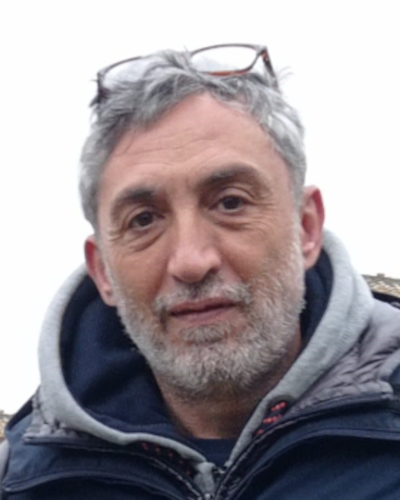 Gennaro Gentile
Gennaro Gentile
Institute of Polymers, Composites and Biomaterials (IPCB-CNR)
SPECIAL SESSION DESCRIPTION
Continuous monitoring of the health status of marine habitats is rapidly emerging, mostly pushed by the clear evidences of anthropic impacts in the form of water pollution and climate change.
Microorganisms, such as bacteria, archaea, and microalgae, play a vital role for aquatic habitats. Algal bloom phenomena and the progressive alteration of phytoplankton composition at the basis of the food web are effects ascribable to variations in climate patterns. The widespread pollution due to microplastics, heavy metals, and other emerging contaminants raises major concerns and require unprecedented research and development efforts. Nanoplastics pollution represents a yet unexplored research field, in which new sampling and analytical techniques are being developed. The wide heterogeneity of plastic items characteristics that vary in terms of shapes, sizes, colour, and composition, some of these properties changing over time due to plastic aging in water, raises a question on the “microplastic” definition itself. Methods to realistically simulate microplastics are the basis for developing reliable identification methodologies. There is a consolidated attention in establishing metrology methods to identify the presence of pollutants in automatic way. Good examples in this sense are emerging protocols for water sampling and treatment, high-throughput optical methods and instruments for microparticles imaging, detection and counting, software architectures for data analysis and AI-aided classification, the definition of new biomarkers of stress-induced variations. Within this framework, AI-aided unmanned autonomous vehicles have emerged as precious instruments for continuously monitoring the status of aquatic habitats over large time periods and spatial scales.
The upcoming session is aimed at gathering insights from diverse fields to devise innovative strategies for mapping the status, distribution, and fluxes of pollutants in aquatic environments, while also enhancing their characterization.
We invite contributions from experts across various disciplines, fostering a collaborative effort to address the complex challenges in this crucial domain. Specifically, we seek approaches rooted in:
- Optics and Inspection Systems: Cutting-edge optical techniques and inspection systems for precise mapping and monitoring of pollutants in aquatic ecosystems.
- Autonomous Unmanned Systems for in situ monitoring, collection and characterization.
- Advanced Data Analysis Methods: State-of-the-art methodologies for comprehensive analysis of large datasets related to pollutant dynamics, focusing on accuracy and robustness.
- Microscopy Techniques for Taxonomic Characterization: Advanced microscopy methodologies to facilitate precise taxonomic characterization of pollutants, thereby deepening our understanding of their ecological impacts.
- Innovative Material Science Solutions: Development of sustainable and effective solutions and technologies within the field of material science, particularly aimed at mitigating the pervasive issue of microplastic pollution.
We eagerly anticipate your contributions, which will play a pivotal role in shaping the future of research and technological advancements in environmental science. Together, let us strive towards a cleaner and more sustainable aquatic environment.
TOPICS
The methods include but are not limited to the following:
- Microscopy (e.g. optical, fluorescence, SEM, confocal, DIC, Phase contrast, etc.);
- Imaging flow cytometry;
- 3D Refractive Index Tomography;
- High-throughput line scanning imaging;
- Imaging methods based on coherent light (digital holography, interferometry);
- Spectroscopy techniques: FT-IR, Micro-FTIR, Nano-FTIR, AFM-IR, NIR spectroscopy;
- Raman based techniques: confocal Raman microscopy, Raman Tweezers, Surface Enhanced Raman Spectroscopy;
- NMR;
- Optical tweezers and optofluidics;
- Thermal analyses: DSC, TGA, Pyrolyser and hyphenated techniques;
- Remote sensing (including, e.g. SAR, Pol-SAR, Differential SAR).
The fields of application include but are not limited to:
- Detection and characterization emerging pollutants, including micro and nanoplastics;
- Environmental relevance of test materials for emerging pollutants and micro and nanoplastics detection and quantification in complex matrices;
- Biomarkers for water pollution monitoring;
- Microplankton distribution in the water column;
- Characterization of microorganisms (diatoms, microplankton);
- Taxonomy;
- Detection of absorbed pollutants (PFAS/PFOA, antibiotics, …);
- Innovative solutions to mitigate water pollution due to emerging contaminants, including micro and nanoplastics;
- Recovery and recycling of marine plastics;
- Technologies to improve degradation of pollutants, including micro and nanoplastics;
- Realistic test materials.
Furthermore, among others will be considered:
- Water sampling systems and protocols;
- Data analysis methods;
- Artificial Intelligence;
- Multisensors assays;
- Multiscale analysis;
- Data inversion;
- Nanotechnology and Nanospectroscopies.
ABOUT THE ORGANIZERS
Pietro Ferraro, is Research Director at the Institute of Applied Science and Intelligent Systems, National Council of Research (CNR-ISASI), Pozzuoli, Italy. He is now pursuing his interests in 3D imaging for applications in non destructive testing in aerospace, biomedical field, fiber sensors, nanofluidics, and optofluidics, and application of optical methods for detection of microplastics.. He has published about 300 papers in peer-review journals and has been an invited speaker in several international conferences. He is a co-editor of two books: Micro-/ Nanoengineering and Characterization of Ferroelectric Crystals for Photonic Applications (New York, NY, USA: Springer-Verlag, 2008) and Coherent Light Microscopy(New York, NY, USA: Springer-Verlag, 2011). Dr. Ferraro is a Fellow of the International Society for Optics and Photonics (SPIE) and the Optical Society of America (OSA). He is the Topical Editor of Biomedical Optics Express, member of the Editorial Board of the Optics and Lasers in Engineering Journal, Editor of Nature Light & Science Applications journal, has been member of the Editorial Board of the Measurement & Science Technology Journal for 12 years. He received the SPIE Dannis Gabor Awared in 2020. He has been member of the Scientific Board of Italian Space Agency (Agenzia Spaziale Italiana).
Vittorio Bianco (VB) received the M.S. degree (cum laude) in telecommunications engineering from the University “Federico II” of Naples, Italy, in 2012 and the Ph.D. degree in materials and structures engineering from the same University in 2016. He won the IEEE Best Doctoral Thesis in Optoelectronics 2016 Award. In 2023 he was awarded as best italian young researcher in the field “AI, Big Data and High Performance Computing” for his research on the detection of microplastics using AI-aided Holographic microscopy. VB has performed research in different labs in Italy, Germany and USA, gaining team-work skills, independence and responsibility attitudes in carrying out project activities. In 2011, he worked with the German Aerospace Centre, Munich, Germany, in the fields of SAR interferometry and tomography. In 2017, he was a Postdoc with the University of California, Los Angeles (UCLA), USA, working in the field of lensless inline holographic flow cytometry for point of care diagnostics and water quality monitoring. Since 2012, he has been with the Italian National Research Council, where he is currently working at ISASI. VB’s research interests include the fields of quantitative phase imaging (QPI), in-flow holographic tomography, optical systems engineering, image processing and computational microscopy, digital holography, Fourier Ptychographic Microscopy, bio-speckle analysis, AI applied to microfluidics, Lab on a Chip imaging, single-cell analysis, medical diagnostics and environmental monitoring. He coauthored more than 300 works in his field of expertise.
Stefania Federici, received her PhD in Technologies and Energetic Systems for Mechanical Industry (University of Brescia) in 2012 and her M.Sc. degree (cum laude) in Physics from Università Cattolica del Sacro Cuore in 2008. She is currently Senior Research Fellow at the Department of Mechanical and Industrial Engineering at the University of Brescia. Her research activity is focused on the realization of more realistic test materials for micro and nanoplastics environmental pollution. She is also interested in the study of the interaction between nanoplastics and biological systems. She is responsible for the “Chem-Bio-Nano Interfaces” division at the Chemistry for Technologies Laboratory at the University of Brescia. She is Action Chair of the COST Action “Plastics monitoRIng detectiOn RemedIaTion recovery – PRIORITY”, which connects about 400 researchers working on micro and nanoplastics issues. She participates in several national and international projects dealing with micro and nanoplastics.
Dr. Cosimo Distante holds a Master’s degree in Computer Science from the University of Bari and a PhD in Materials Engineering from the University of Salento. His primary expertise lies in Artificial Intelligence, specifically within Computer Vision, pattern recognition, image processing, machine learning, and robotics. He served as a researcher at the Computer Science Department of UMass (USA), where he conducted research in robotics, artificial neural networks, and vision. During his tenure at the University of Massachusetts, he was also a Teaching Assistant for the "Artificial Intelligence" (683) class in the Master of Science program. Dr. Distante joined the National Research Council (CNR) of Italy in 2001. Since 2003, he has been an Adjunct Professor for Computer Vision, Pattern Recognition, and Image Processing courses in Computer Engineering at the University of Salento.
Key Highlights and Appointments. He is a member of the Scientific Committee for the Executive Master in Applied Data Science at the University of Salento, Associate of the CMCC Foundation (Euro-Mediterranean Center on Climate Change) and member of the technology transfer committee of the I-Store research center. In 2011, his project Taggalo won the National Innovation Award (Working Capital Telecom Italia – PNI Cube). In 2012, he was honored with the "Premio dei Premi" for Innovation by the President of the Senate. In 2015, Taggalo won ChallengeUP (an acceleration program by Cisco, Intel, and Deutsche Telekom). He has served as General Chair for several international conferences, including ICIAP 2021, IEEE AVSS (2017 and 2020), and ACIVS 2016. He is a Senior Member of the IEEE Signal Processing Society and Computer Society. He is the Head of the Lecce branch of the Institute of Applied Sciences and Intelligent Systems (ISASI-CNR), where he coordinates a team of researchers, PhD students, and a joint laboratory with SMEs focused on Smart Health systems. He also serves as an expert member in innovation for the Ministry of University and Research (MUR), the Ministry of Economic Development (MISE), and various regional agencies for technology and innovation.
Gennaro Gentile (GG) received the M.S. degree in chemistry from the University “Federico II” of Naples, Italy, in 1998. He is currently research director at the Institute of Polymers, Composites and Biomaterials (IPCB) of the Italian National Research Council (CNR).
His research activities are focused on polymer science and technology, with particular attention to the development of hierarchical porous systems for water and air remediation and on micro-and nanostructured polymer based composites and coatings with advanced functional properties. GG is scientific coordinator of the laboratory of scanning and transmission electron microscopy of IPCB-CNR and scientific responsible for the Institute of several European and Italian R&D projects. GG is co-author of about 200 scientific papers published on international journals and 5 patents.