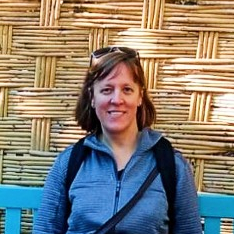
 Jadranka Šepić
KEYNOTE LECTURE
Five thousand years of water level measurements: from carvings in black basalt stones to satellite missions
Jadranka Šepić
Faculty of Science, University of Split, Croatia
ABSTRACT
From the very beginning, the effort to measure water level has been driven both by our drive to understand the physical background of sea-level changes and by the practical need to support society: from facilitating port navigation and building coastal infrastructure, to protecting property and developing and implementing early warning systems for sea-level floodings.
This talk explores the history of sea-level measurement principles and techniques, starting with the black basalt stone records of Nile flood heights (2500 BCE), through the long centuries of nilometer and tidal pole measurements, followed by the first mechanical sea-level tide-gauge measurements (early 19th century), and the major advances in measuring instrumentation in the late 20th and early 21st centuries, culminating in the latest Copernicus Sentinel-6B satellite mission. A detour into the history of the Adriatic sea level measurements history is given as well.
The main processes governing sea-level changes are discussed, with special attention devoted to sea-level extremes such as tides, storm surges, tsunamis and climate change-induced sea-level rise. Sea-level measuring systems are then assessed in relation to their capability to capture these extremes. Several extreme events that motivated the development of new sea-level measuring instrumentation and the upgrading of sea-level measuring networks, as well as the changes that followed after these events, are discussed in more detail: the North Sea flood of 1953, the Chilean transoceanic tsunamis of 1966, the Boxing Day tsunami of 2004, and the Tohoku tsunami of 2011.
The talk concludes with an overview of global, Mediterranean and, in particular, Adriatic sea-level measuring networks. Persistent challenges and gaps are discussed.
SPEAKER BIOGRAPHY
Dr Jadranka Šepić is a professor of environmental physics at the Faculty of Science, University of Split. Her research focuses on the physics of extreme sea-level events, with particular emphasis on meteotsunamis, as well as storm surges, tsunamis, and other sea-level oscillations that can lead to hazardous coastal extremes. Jadranka Šepić has authored over 70 high-impact, peer-reviewed publications in leading journals, accumulating over 2,000 citations (h-index: 30) (WoS). She currently leads a team of six early career researchers (PhD candidates and postdoctoral researchers) dedicated to studying sea-level extremes. Jadranka is a double European Research Council (ERC) grantee and has also served as a PI on numerous national research projects. Her scientific excellence has been recognised through five prestigious Croatian scientific awards, as well as the 2019 EGU Natural Hazards Division Outstanding Early Career Scientist Award. She is strongly committed to teaching and science outreach, engaging students at all levels and the general public through lectures and hands-on oceanographic workshops.